


.jpg)
.jpg)
.jpg)
.jpg)
.jpg)
.jpg)


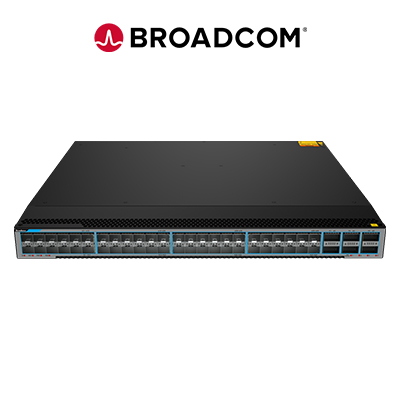
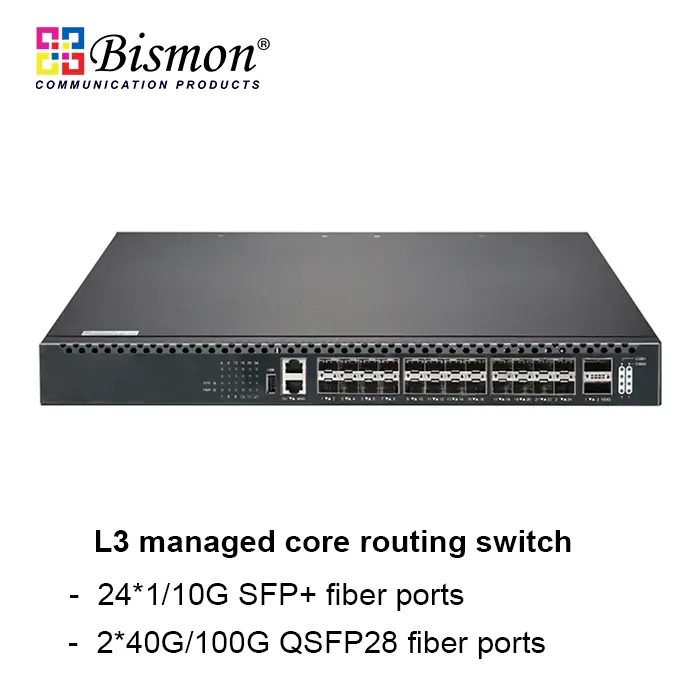
24*1/10G SFP+ fiber with 2*40G/100G QSFP28 fiber L3 managed core routing switch
เป็นสวิตช์เครือข่ายแบบ L3 Managed ประสิทธิภาพสูง พร้อมพอร์ต 24?10G SFP+ และ 2?40/100G QSFP28 แบบติดตั้งในตู้แร็คขนาด 1U เหมาะสำหรับเครือข่าย Metro Ethernet, Campus Network, Enterprise และ Data Center ขนาดใหญ่ รองรับการสวิตชิ่งความเร็วระดับ Line-rate พร้อมฟังก์ชัน IPv6, Virtualization, Network Security และ Traffic Management มีระบบความพร้อมใช้งานสูง (High Availability) เช่น Graceful Restart, Uninterrupted Forwarding และ Redundant Protection เพื่อให้เครือข่ายทำงานได้อย่างต่อเนื่องและมีเสถียรภาพสูง.
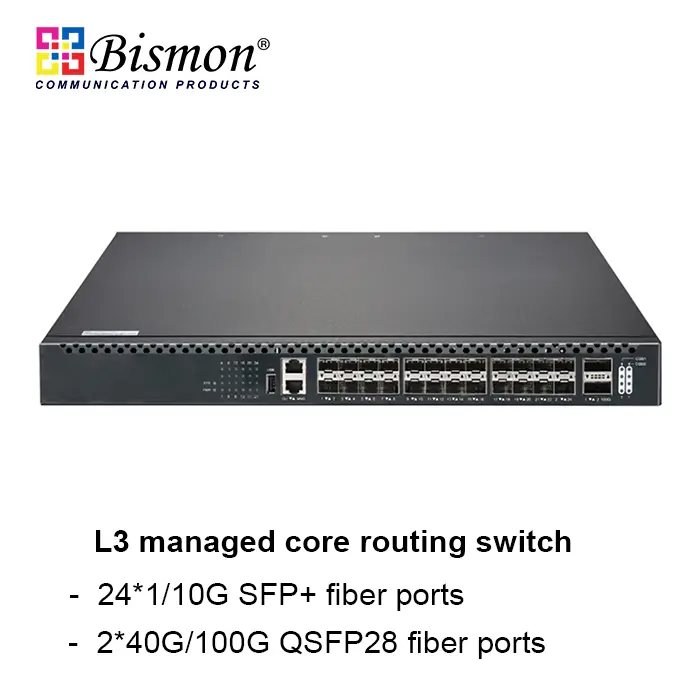
Part number : B1-68240-2QFM
Brand : BISMON
Price : 91,336.00 Baht / pcs
Delivery time : 20 Day
Minimum order quantity : 1 set
Warranty : 2 Year

(Online ชำระด้วยบัตรเครดิต ไม่มีชาร์จ)
OVERVIEW
The B1-68240-2QFM is a high-performance L3 managed Ethernet switch launched by BISMON, which is oriented to the next generation of IP metropolitan area networks, large campus networks, and enterprise networks. It has 24*1/10G SFP+ fiber ports and 2*40/100G (QSFP28) fiber ports. Use 1U/19” installation.
To meet the needs of network resource pooling in cloud computing data centers, B1-68240-2QFM supports rich data center features such as BVSS virtualization features. With BISMON data center core switches, it can achieve access to more than 15,000 10G servers, providing a complete network solution for ultra-large data centers. Based on giving high-performance L2/L3/L4 line-speed switching services, it further integrates multiple network services such as IPv6, network security, traffic analysis, virtualization, etc., combined with various data center high-reliability technologies such as uninterrupted upgrades, uninterrupted forwarding, graceful restart, and redundant protection, thereby ensuring the network's longest uninterrupted communication capabilities.
FEATURE
Advanced hardware architecture
-Standard data center switching between front-back mode and back -front mode deign and fan automatic speed regulation.
-Equipped with ASIC switching chip and multi-core processor, with switching capacity of 1.28Tbps, meeting the high performance, high capacity, high density, and scalability requirements of the data center.
Data center service feature
VSS (Virtual Switch System) virtualization cluster switching technology
-VSS can virtualize multiple physical devices into a logical device. Its virtual system's performance, reliability, flexibility, and management are superior to independent physical devices.
-The distance of the virtual cluster system can be extended to 80km through the virtual cluster function, which is flexible and convenient, breaking the geographical restrictions of traditional cluster technology.
-The virtualization system can make full use of each link between physical devices, avoid the blocking of links by the spanning tree protocol of the traditional networking model, double the performance, and protect the original link investment to the greatest extent.
-The entire virtual system realizes unified management of a single IP, and the actual physical equipment is transparent to users, which simplifies the management of network equipment and network topology, greatly improves network operation efficiency, and effectively reduces operation and maintenance costs.
-Based on advanced distributed processing technology, through efficient cross-physical device link aggregation function, the separation of the logical control plane and the business data plane is realized, providing uninterrupted three-layer routing forwarding, avoiding business interruption caused by single point failure, and greatly improving the reliability of the virtual system.
High reliability of data center
-Support ISSU (In-Service Software Upgrade) to ensure uninterrupted forwarding of user data during system upgrades and master control switching.
-Complete Ethernet OAM mechanism, supports 802.3ah, and realizes rapid detection and location of faults through real-time monitoring of network operation status.
-Based on HPS (Hitless Protection System), the key power supply system adopts a redundant design, modular hot-swappable, and supports seamless switching in case of failure without interrupting business.
-Support STP/RSTP/MSTP protocols, VRRP protocols, and simple and efficient redundant protection mechanisms such as ring network protection, dual uplink master-slave link protection, and LACP link aggregation.
-Ultra-high-precision BFD bidirectional link detection mechanism, through linkage with L2/L3 protocols, realizes millisecond-level fault detection and service recovery, greatly improving the reliability of the network system.
Rich business feature
-Complete L2 and L3 multicast routing protocols to meet the access requirements of IPTV, multi-terminal HD video surveillance, and HD video conferencing.
-Complete L3 routing protocols and large routing table capacity to meet the needs of various types of network interconnection, and can form ultra-large data center networks, campus networks, enterprise networks, and industry user private networks.
Comprehensive IPv6 solution
-Support IPv6 protocol family, IPv6 neighbor discovery, ICMPv6, Path MTU discovery, DHCPv6, and other IPv6 features.
-Support IPv6-based Ping, Traceroute, Telnet, SSH, ACL, etc. to meet the needs of pure IPv6 network equipment management and business control.
-Support IPv6 multicast features such as MLD and MLD Snooping, IPv6 static routing, RIPng, OSPFv3, BGP4+, and other IPv6 L3 routing protocols to provide users with complete IPv6 L2 and L3 solutions.
Security
-Support IEEE 802.1x, Radius, and Tacacs+, to provide users with a complete security authentication mechanism.
-Advanced hardware architecture design, hardware-implemented hierarchical scheduling, and protection of messages, support for preventing DoS, TCP SYN Flood, UDP Flood, broadcast storm, large traffic, and other attacks on the device. support command line hierarchical protection, different levels of users have different management permissions.
-Support plain text or MD5 authentication of related routing protocols, support uRPF reverse routing lookup technology, which can effectively control illegal business. Hardware-level message deep detection and filtering technology, supports deep detection of control messages and data messages, to effectively isolate illegal data messages and improve the security of the network system.
Environmental protection design
-Support energy-efficient Ethernet function and complies with the international standard IEEE 802.3az to effectively reduce energy consumption.
-Intelligent fan design supports a flexible selection of front-to-back/back-to-front air ducts and automatic fan speed adjustment, effectively reducing the speed, and noise, and extending the fan life.
-Adopt advanced power system architecture design to achieve efficient power conversion, unique power monitoring, slow start, and other functions, real-time monitoring of the whole machine operation status, intelligent adjustment, and deep energy saving.
🔗 สินค้าในหมวดเดียวกัน
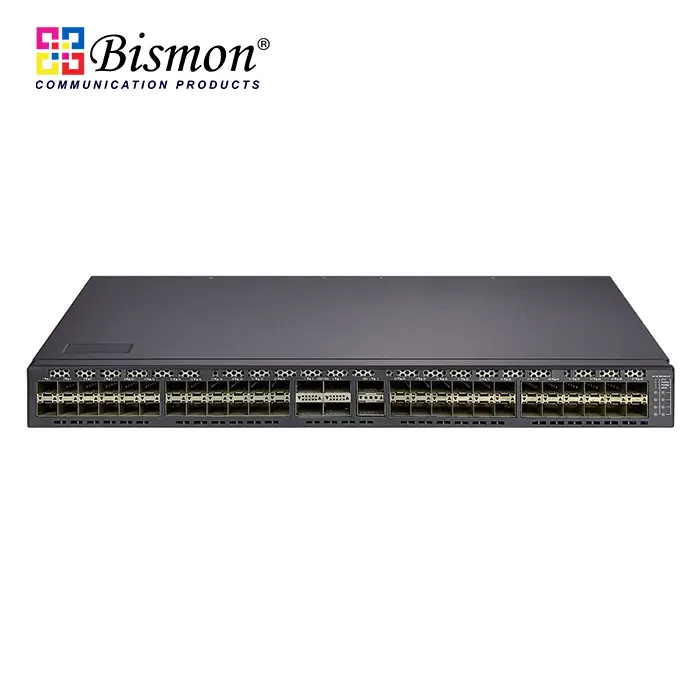 48*1/10G SFP+ fiber+2*40G QSFP28 uplink+4*100G QSFP28 L3 core routing switch
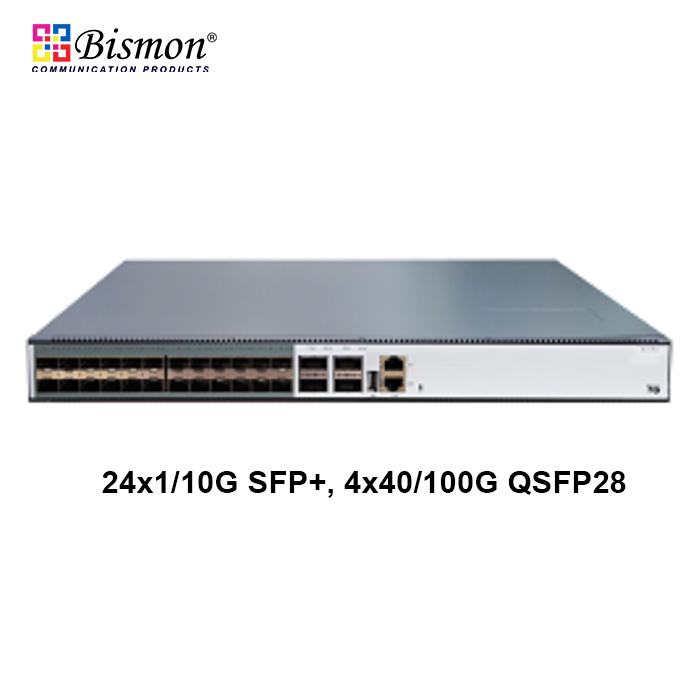 24*1/10GB SFP+ with 4*40/100G QSFP L3 Managed Core Routing Switch
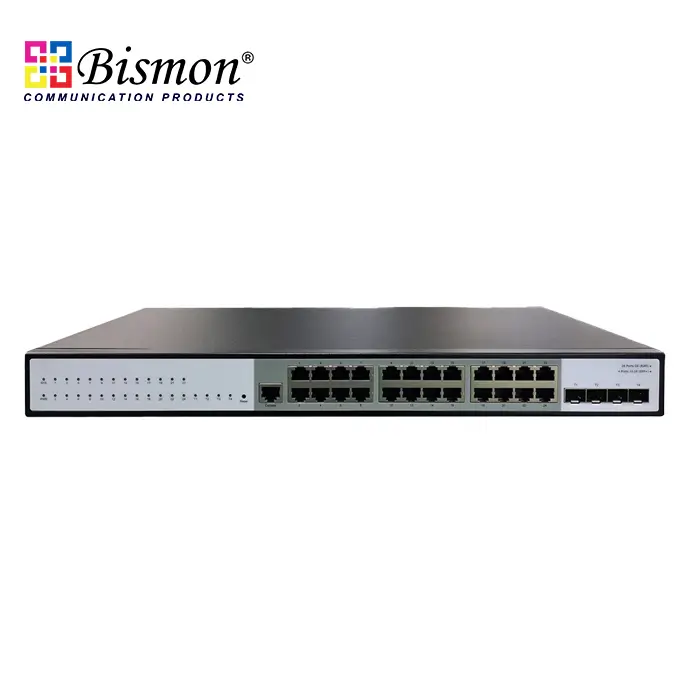 4*1/10G uplink SFP+ fiber ports and 24*10/100/1000M RJ45 ports L3 managed Ethernet core switch
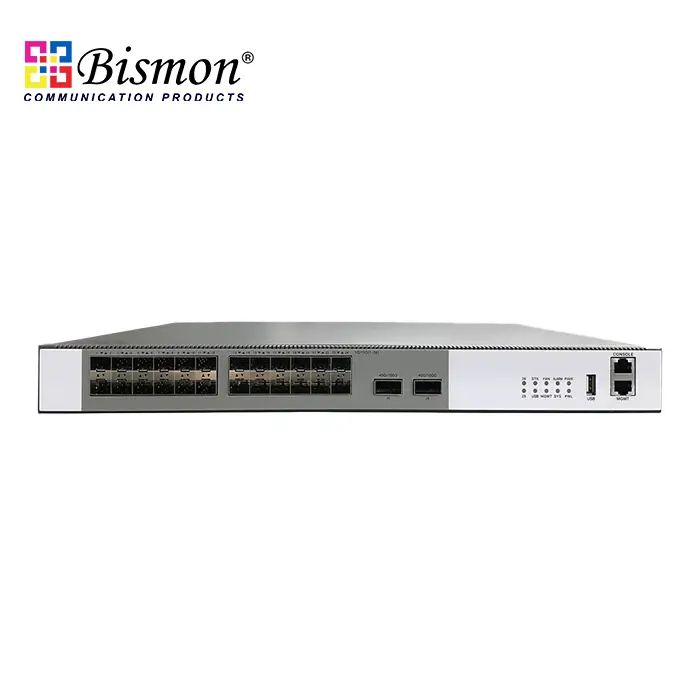 24*1/10G SFP+ fiber ports and 2*40G QSFP fiber ports L3 managed
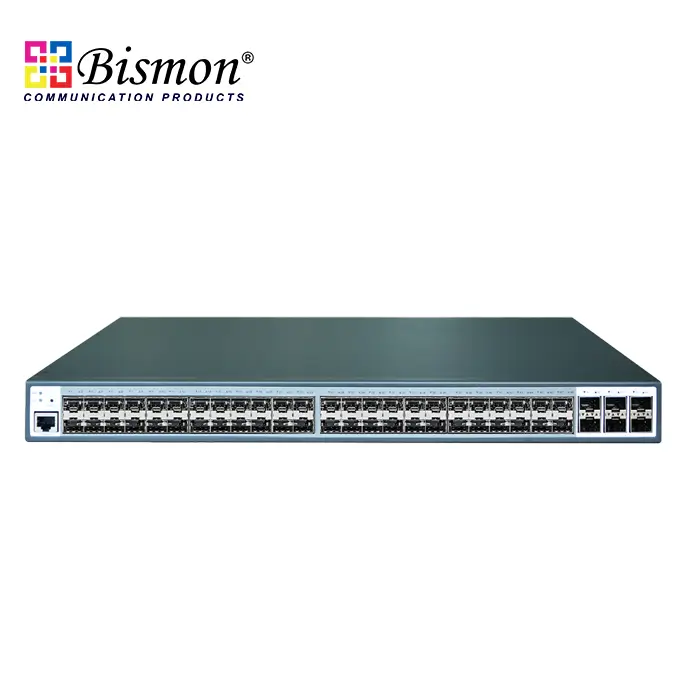 48*100/1000M SFP fiber ports and 6*1/10G SFP+ fiber ports L3 managed
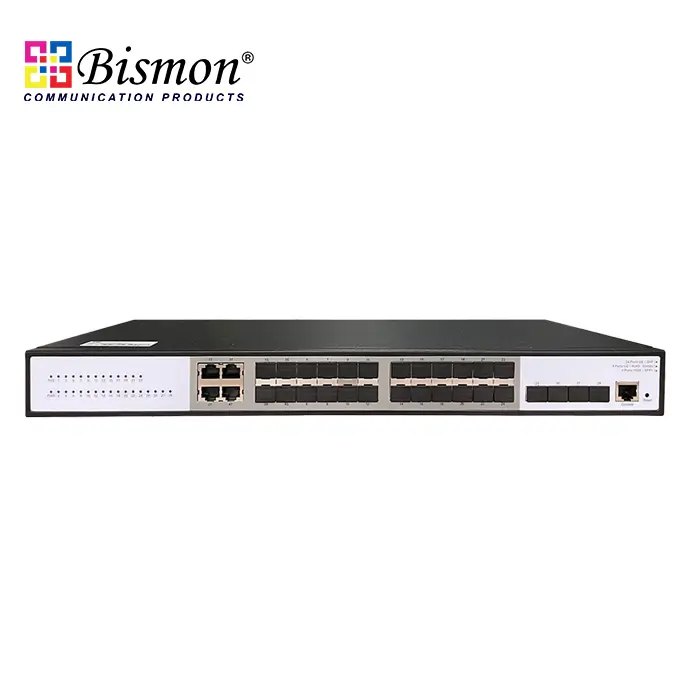 4*1/10G uplink SFP+ fiber ports and 4*10/100/1000Base-T RJ45 and 4*100/1000Base-X SFP fiber combo ports and 20*100/1000Base-X SFP fiber ports L3 managed
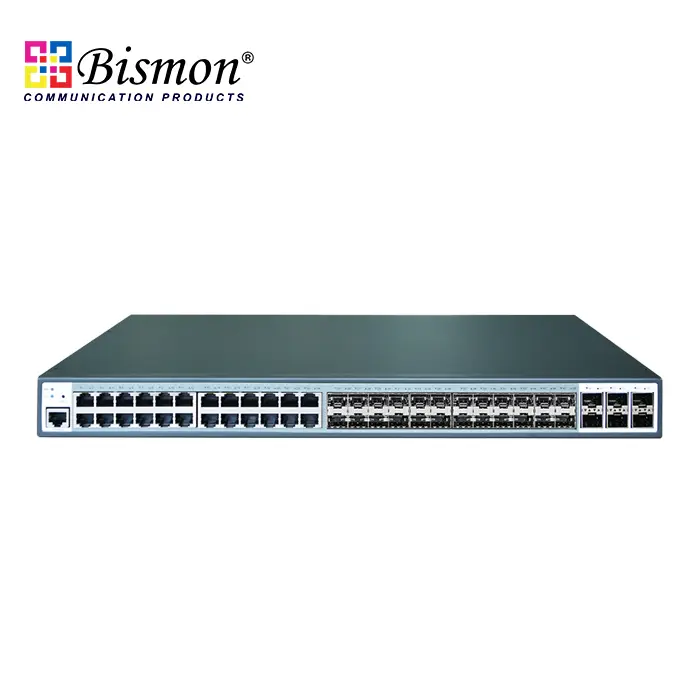 24*100/1000M SFP ports and 6*1/10G SFP+ fiber ports and 24*10/100/1000M RJ45 ports L3 managed
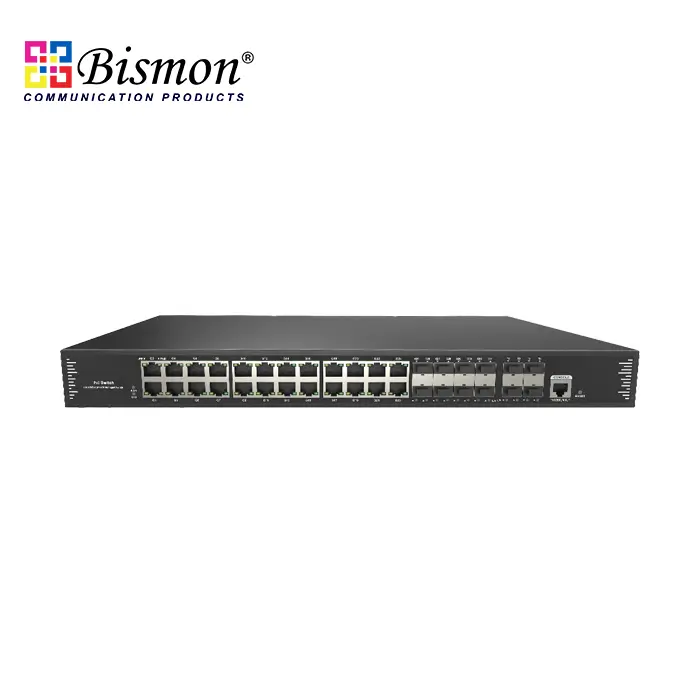 24*10/100/1000M RJ45 ports and 8*100/1000M SFP fiber ports (combo port) and 4*1/10G uplink SFP+ L3 managed PoE switch (600W)